Document AI systems are often evaluated by how accurately they extract text. In regulated industries, that framing misses the harder problem. The question is not only whether a value is correct, but whether it can be traced, verified, and defended once it enters a production workflow.
Finance, healthcare, and legal organizations operate under continuous scrutiny. Outputs are reviewed months later. Decisions are challenged. Systems are expected to explain themselves long after the original documents were processed. In this environment, layout segmentation and bounding boxes are not implementation details. They determine whether extracted data functions as evidence or as an unverified assertion.
This post explains why layout awareness is foundational to trust, citation, and data lineage in real world document AI systems.
How Documents Encode Meaning
Documents encode meaning through structure as much as through text. Tables express relationships through rows and columns. Headers scope the interpretation of everything beneath them. Footnotes qualify values by proximity. Legal clauses derive meaning from their position within a hierarchy. Clinical instructions rely on adjacency between values, units, and qualifiers.
When documents are flattened into plain text, these relationships are weakened or lost. Even if every word is transcribed correctly, the spatial context that gives those words meaning is no longer intact. A value without its structural placement becomes ambiguous, especially when reviewed outside the original document.
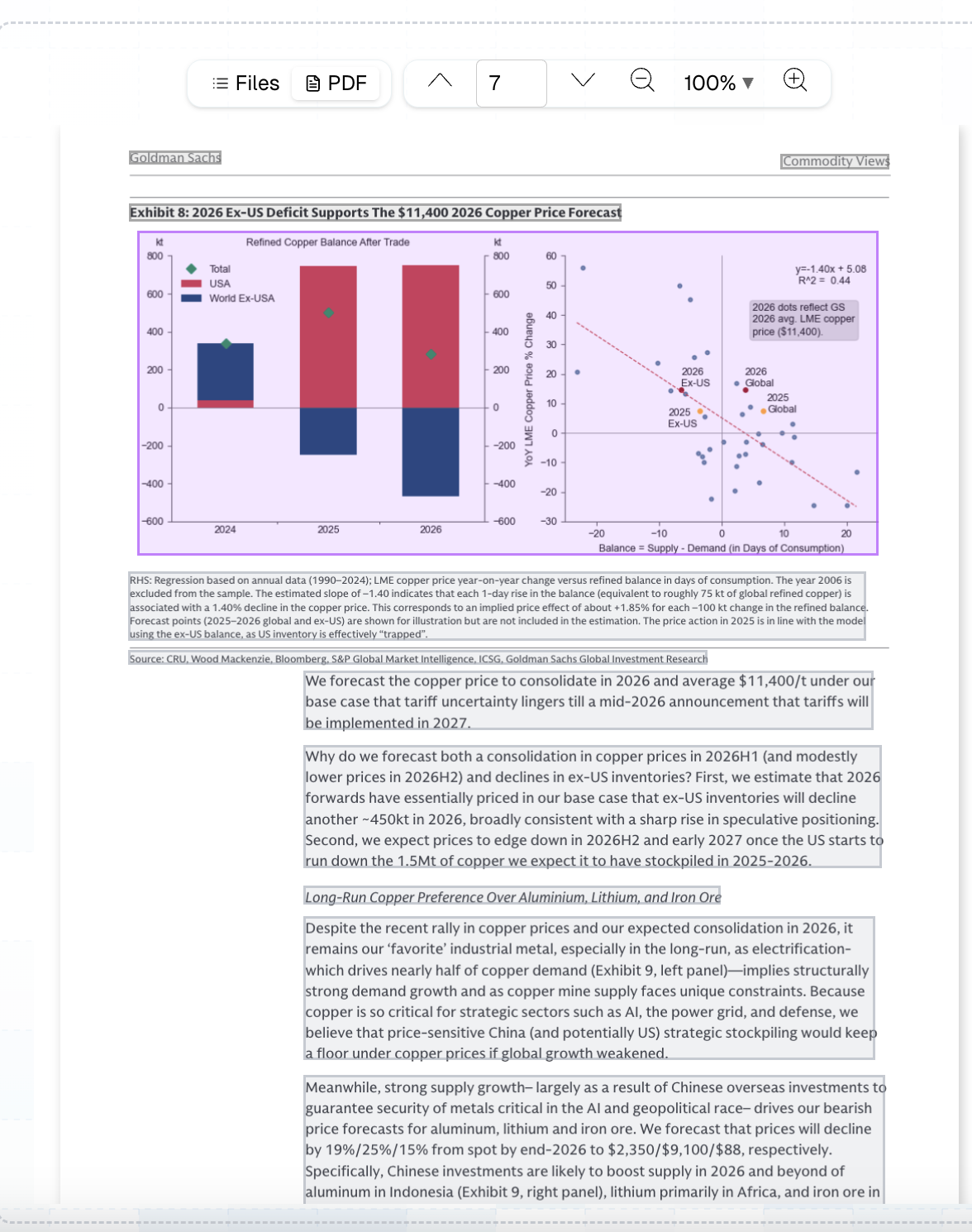
Layout segmentation exists to preserve these relationships. Bounding boxes anchor content to coordinates on the page, allowing systems to reason about where information appears and how it relates to surrounding elements. This spatial grounding is what allows downstream interpretation to remain faithful to the source document.
Text Without Location Is Difficult to Defend
From a governance perspective, extracted text without location is difficult to verify. When a reviewer asks where a particular value came from, the system needs to provide a precise answer. It must identify the page, the region, and the surrounding context that supports the extraction.
Without bounding boxes, this process becomes manual. Reviewers search entire documents, compare strings, and infer intent. This is slow, error prone, and often inconclusive. More importantly, it does not scale when documents are processed in large volumes or revisited long after ingestion.
Bounding boxes turn extracted values into references. They allow systems to point back to a specific region of a specific page and preserve the context that informed the extraction. This positional grounding is what makes verification practical rather than speculative.
Why Citations Depend on Layout
Citations are sometimes described as an overlay applied after extraction. In practice, they emerge naturally from layout awareness. A meaningful citation requires a stable connection between an extracted value and its source location within the document.
Bounding boxes provide that connection. By tying each value to exact coordinates, a system can support precise citations that point to the relevant region rather than an entire page or document. This precision matters during review, dispute resolution, and regulatory examination, where approximate references are rarely sufficient.
When layout information is missing, citations lose their usefulness. They become vague pointers rather than verifiable links. In regulated workflows, that distinction determines whether extracted data can be trusted.
Financial Documents and Positional Meaning
Financial documents illustrate why layout matters even when numbers appear correct. The meaning of a figure depends heavily on where it appears. Totals, subtotals, and line items may share similar values but serve very different roles. Footnotes often qualify whether amounts include or exclude certain components.
Text first extraction can preserve the numbers while losing their structural placement. During audit, there is no reliable way to demonstrate that a value corresponds to the intended row, column, or section.
Layout segmentation preserves these relationships. Bounding boxes allow systems to associate values with their headers and neighboring cells. This makes financial data traceable and defensible, which is essential for models and reports that operate under regulatory oversight.
Healthcare Requires Preserved Context
Healthcare documents often compress critical information into small regions of the page. Dosages, units, frequencies, and qualifiers are frequently expressed together and rely on proximity for correct interpretation.
A dosage without its unit is meaningless. A unit without its qualifier can be dangerous. Dates without labels can refer to different clinical events. These errors may not be obvious when text is extracted in isolation.
Layout segmentation preserves the relationships between these elements. Bounding boxes allow systems to bind values to their surrounding context, making it possible for clinicians and claims reviewers to verify interpretation quickly. In healthcare workflows, this ability to confirm context is a safety requirement rather than a convenience.
Legal Documents and Hierarchy
Legal documents derive meaning from hierarchy and scope. Clauses are nested within sections. Amendments modify specific provisions. Exhibits apply only to defined portions of an agreement.
Text only extraction often collapses this structure. Clauses may be extracted correctly but detached from their parent sections. Amendments may be treated as independent text rather than scoped changes. During review, legal teams must reconstruct hierarchy manually.
Layout segmentation captures this structure explicitly. Bounding boxes identify where clauses begin and end and how they relate to surrounding headings. This enables accurate attribution and defensible interpretation in legal workflows.
Why Layout Must Come Early in the Pipeline
Many document AI systems attempt to interpret content before fully understanding layout. This approach assumes that meaning can be reconstructed from text alone. In regulated environments, that assumption does not hold.
Once layout information is lost, it cannot be reliably recovered. Structural errors introduced early in the pipeline propagate downstream and are difficult to detect through surface level accuracy checks.
Layout segmentation needs to occur early and bounding boxes should be treated as first class outputs rather than optional metadata. This allows interpretation and extraction to build on a stable structural foundation rather than attempting to infer structure after the fact.
Layout as a Trust Primitive
As document AI systems mature, layout awareness becomes part of the trust foundation of the system. Bounding boxes enable traceability by linking values to source regions. That traceability supports verification and review over time. Verification is what allows organizations to rely on automated outputs under scrutiny.
Accuracy remains necessary, but accuracy without provenance is fragile. Systems that preserve layout produce outputs that can be explained, reviewed, and governed. Systems that do not struggle once accountability becomes a requirement.
Closing
Layout segmentation and bounding boxes are often treated as technical details. In regulated industries, they determine whether document AI produces unsupported answers or defensible evidence.
Systems that cannot point to where data came from cannot support review, governance, or long term trust. Systems that preserve layout and context move document AI from automation experiments into reliable enterprise infrastructure.